


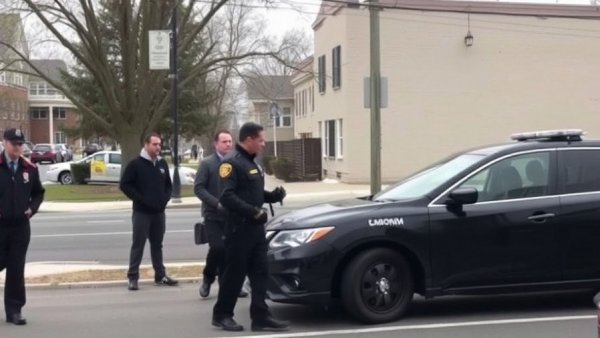
Unpacking the Morristown Incident: What Really Happened?
On a seemingly ordinary October morning in Morristown, a routine ice skating trip took a harrowing turn for Alexis Mascitti Brown. As she drove to Mennen Arena, she stumbled across a significant ICE activity on Abbett Avenue. That moment ignited a wave of concern in the community, leading to a viral video and an impactful council meeting.
In her video, Brown claimed she was assaulted by an ICE officer while local police stood by. The incident quickly gained traction on social media, raising urgent questions about local police collaboration with federal Immigration and Customs Enforcement—a topic that has become increasingly sensitive given New Jersey’s stance against such cooperation.
The Community Reacts: Voices from Morristown
At a subsequent meeting, concerned community members voiced their outrage and frustration. “Why was the police presence necessary?” asked Joseph Bellomo, emphasizing the perceived breach of public trust. Community leaders are now grappling with a growing apprehension that federal enforcement action leads to escalating community divides.
Those who witnessed the event had compelling stories to share. One community member, retired teacher Joseph Bellomo, mentioned escorting children to school buses during the ensuing chaos. “It was crucial to reassure the children, but it was alarming to see the police seemingly enabling ICE actions,” he reflected. Brown's experience was just one of many that left residents pondering their safety in the face of aggressive federal enforcement.
State Legislation and Institutional Questions
In the wake of the Morristown encounter, the state of New Jersey faces critical questions regarding its laws on police cooperation with federal immigration agencies. Current policies are designed to protect residents from unwarranted ICE actions, but how effective are they if local law enforcement does not adhere to these regulations?
Activists like Adam McGovern from Project NINJA are demanding transparency and greater accountability from local police departments. He called for more proactive non-cooperation with ICE, stating, “It’s our responsibility to challenge any actions that incite fear within our communities.” As this conversation grows, policymakers may need to reevaluate existing legislation surrounding ICE enforcement and police involvement.
Community Safety vs. Law Enforcement Collaboration
The crux of the debate centers around the balance between community safety and perceived complicity in enforcing federal immigration laws. Mayor Tim Dougherty defended the police's role, asserting that their presence was solely to maintain order during ICE's operation. However, community responses indicate that the perception of collaboration is undermining trust between residents and law enforcement.
The situation also brings to light the challenges local police face in navigating their responsibilities amidst controversial federal policies. As tensions rise, Morristown—and similar municipalities—must critically assess how to foster trust while ensuring safety in their communities.
A Turning Point for Morristown
This incident serves as a critical juncture for Morristown's approach to public safety and immigration enforcement. It calls on civic leaders, local officials, and community members to engage in deeper dialogues and collaborative problem-solving. Understanding the emotional and practical implications of federal actions on individual lives is essential in building a more united community.
“We need to ensure that all voices are heard and that actions we take prioritize the safety and dignity of all our residents,” said Brown, encapsulating the sentiment of many during the tense council meeting. Striving for an inclusive community that respects individual rights while addressing real safety concerns is now more crucial than ever.
What’s Next for Community Relations?
The path forward requires active participation from civic leaders in New Jersey's public policy discourse. Policymakers can develop frameworks that promote cooperative strategies and maintain community safety without compromising the values of trust and respect.
As this situation develops, Morristown must embrace the learning opportunity it presents. Building strong relationships between residents and police will depend on transparency, outreach efforts, and an unwavering commitment to the principles that define the fabric of a just society.
— Emily Brooks






Write A Comment